
How to make pvc pipe connectors
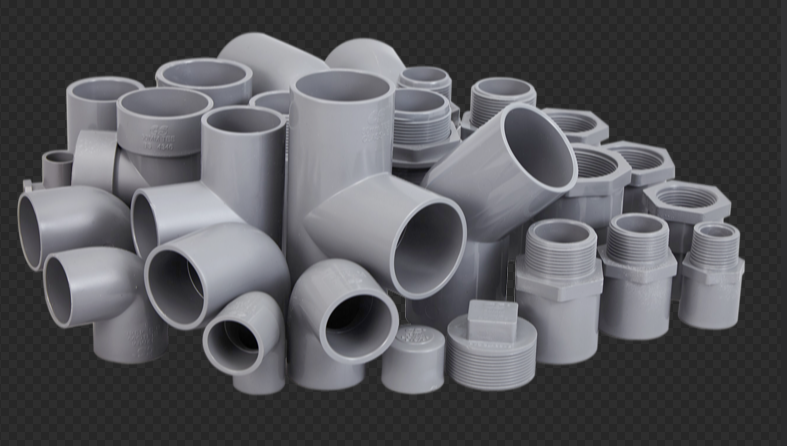
PVC pipe connectors can be made through several methods depending on your need — custom fabrication, machining, or molding.
Method 1: Machining from PVC Stock (Most Precise)
Best for custom one-off connectors with tight tolerances.
Materials needed:
PVC round bar or pipe stock (available in gray, white, or clear)
Lathe and/or milling machine
Drill press or CNC router
Pipe tap and die set (for threaded connectors)
Process:
Select stock diameter — choose bar stock slightly larger than your finished OD
Turn outer profile on lathe to final OD
Bore inner diameter to match pipe OD (slip fit = pipe OD + 0.005–0.010″)
Machine socket depth — standard is 1× pipe diameter minimum
Add threads if needed — use standard NPT or BSP tap/die
Deburr and chamfer entry edges for easy pipe insertion
Tolerances to target:
Slip fit socket: pipe OD + 0.005–0.015″
Interference fit: pipe OD + 0.000–0.003″
Thread class: NPT 2B for general use
Method 2: 3D Printing (Fastest for Prototypes)
Good for non-pressure, low-temperature custom shapes.
Recommended materials:
Material | Max Pressure | Max Temp | Notes |
PETG | Low (~30 psi) | ~70°C | Good chemical resistance |
ASA / ABS | Low–medium | ~90°C | UV stable, machinable |
Nylon (PA12) | Medium | ~100°C | Flexible, tough |
PVC filament | Low | ~60°C | Chemically compatible but tricky to print |
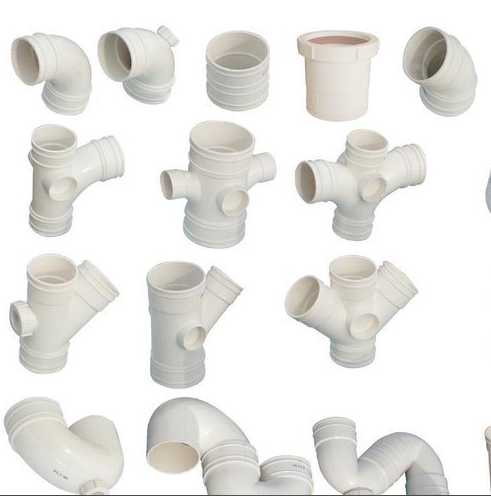
Design tips for 3D printed connectors:
Wall thickness minimum 3–4mm for pressure-bearing parts
Add 0.2–0.4mm clearance on socket ID for pipe slip fit
Orient print so layer lines run perpendicular to pressure direction
Print at 4+ perimeters and 40–60% infill for strength
Post-process with acetone smoothing (ABS) or epoxy coating to seal layer gaps
Method 3: Injection Molding (For Production Quantities)
For 100+ identical connectors.
Process overview:
Design connector in CAD (allow 0.5–0.8% shrinkage for PVC)
Draft angles: 1–2° on all walls for ejection
Tool mold in aluminum (prototype) or P20 steel (production)
Inject rigid PVC compound at 170–200°C, 10,000–20,000 psi
Cool, eject, and trim gate/sprue
PVC injection molding notes:
PVC is corrosive to molds — use corrosion-resistant steel or chrome plating
Purge machine thoroughly — degraded PVC releases HCl gas
Keep melt temperature controlled — PVC degrades above 210°C
Method 4: Fabricating from PVC Sheet/Pipe (Low-Tech)
For large-diameter or structural connectors.
Techniques:
Heat bending — use heat gun or oven (140–160°C) to soften PVC, form over mandrel, cool in shape
Solvent welding — bond PVC pieces with THF or MEK-based cement; creates molecular bond stronger than the base material
Mechanical fastening — drill and tap PVC; use stainless screws to join flanges or saddle clamps
Solvent welding process:
Cut and deburr both mating surfaces
Dry fit and mark alignment
Apply PVC primer (purple) — cleans and softens surface
Apply PVC cement to both surfaces immediately
Push together with quarter-turn twist, hold 30 seconds
Cure 15 minutes before handling, 24 hours before pressure testing
Common Connector Types You Can Make
Type | Description | Fabrication Method |
Coupling | Straight join, same diameter | Lathe bore from stock |
Reducer | Joins two different diameters | Stepped bore on lathe |
Elbow (90°/45°) | Direction change | 3D print or heat bend |
Tee / Cross | Branch connections | 3D print or milled block |
Flange | Bolted face connection | Mill from flat plate |
Saddle clamp | Tap into existing pipe | Mill or 3D print |
Manifold | Multiple outlets from one inlet | CNC from block or 3D print |
Design Guidelines
Socket depth: minimum = 1× nominal pipe diameter
Wall thickness: minimum 3mm for low pressure, 6mm+ for pressure-rated
Chamfer entry: 15–20° lead-in chamfer on socket mouth
Pressure rating: derate 3D printed parts to 25% of machined PVC rating
Temperature: rigid PVC rated to ~60°C continuous; avoid steam or hot water
Pressure Ratings for Machined PVC Connectors
Pipe Size | Schedule 40 Max Pressure | Schedule 80 Max Pressure |
½″ | 600 psi | 850 psi |
1″ | 450 psi | 630 psi |
2″ | 280 psi | 400 psi |
4″ | 140 psi | 220 psi |
Ratings drop significantly with temperature and with 3D-printed parts.
Safety Notes
Always pressure test at 1.5× working pressure before use
Never use PVC for compressed air — catastrophic brittle failure risk
Wear gloves and eye protection when using PVC cement (solvent fumes)
PVC heated above 210°C releases toxic HCl — ensure ventilation