CNC machining services for rapid prototypes and custom metal and plastic parts.

Precision machined prototypes and parts.

  • Home
  • Capabilities
  • CNC Machining

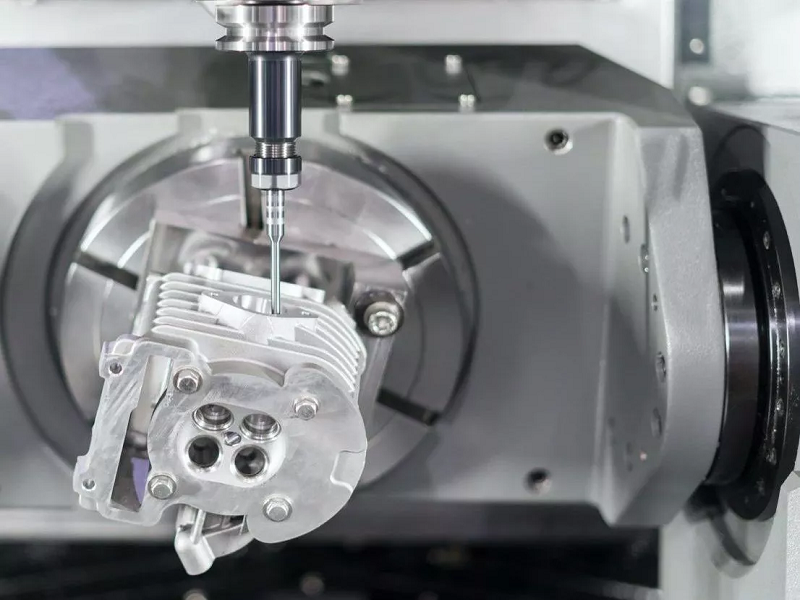
P02-1-1-S02-4-Axis-CNC-Milling-1.png

CNC Machining (Computer Numerical Control Machining) is a manufacturing process where pre-programmed computer software controls the movement of factory tools and machinery. Instead of a human operator manually guiding a cutting tool, the entire process is automated using digital instructions.

How CNC Machining Works

1.Design Phase: A part is designed in CAD (Computer-Aided Design) software (e.g., SolidWorks, Fusion 360).

2.CAM Processing: The CAD model is converted into a CNC program using CAM (Computer-Aided Manufacturing) software. This generates G-code — a language that tells the machine exactly where to move, how fast, and which tool to use.

3.Machine Setup: The workpiece (raw material) is secured on the machine, tools are loaded, and the G-code is uploaded to the CNC controller.

4.Machining: The machine automatically executes the program, moving cutting tools (or the workpiece) with extremely high precision (often to within 0.0001" or 2–5 microns).

Common Types of CNC Machines

1.CNC Mills (3-axis, 4-axis, 5-axis): Remove material using rotating cutting tools. Most versatile.

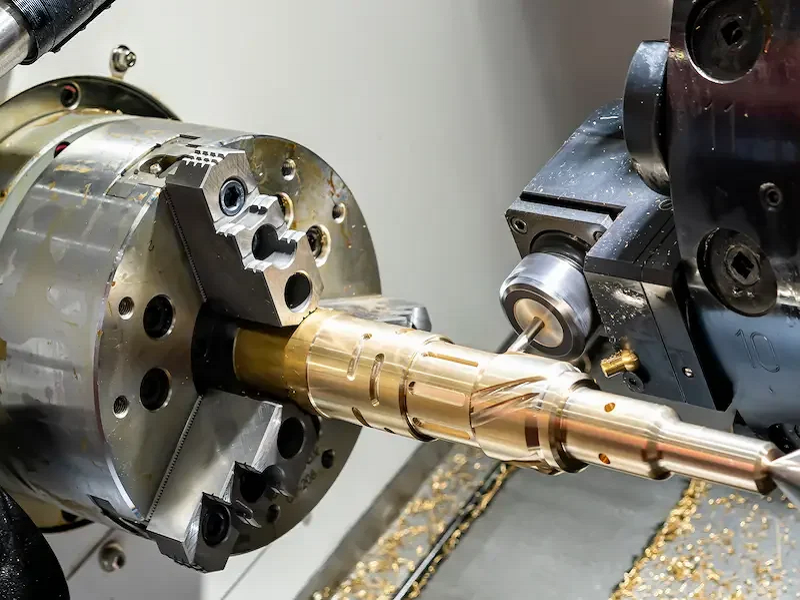
2.CNC Lathes/Turning Centers: Rotate the workpiece against a stationary cutting tool. Ideal for cylindrical parts.

3.CNC Routers: Similar to mills but typically for softer materials (wood, plastics, aluminum).

4.CNC Plasma Cutters: Use a plasma torch to cut sheet metal.

5.CNC Laser Cutters: Use a focused laser beam for cutting or engraving.

6.CNC Waterjet Cutters: Use high-pressure water (often mixed with abrasive) to cut almost any material.

7.CNC Electrical Discharge Machining (EDM): Uses electrical sparks to erode material — great for very hard metals and complex shapes.

Materials Used

Almost anything: aluminum, steel, stainless steel, titanium, brass, copper, plastics (ABS, polycarbonate, PEEK), wood, foam, composites, etc.

Advantages of CNC Machining

1.Extremely high precision and repeatability

2.Can produce complex geometries that are impossible manually

3.24/7operation with minimal human intervention

4..Consistent quality across thousands of parts

5.Easily scalable from prototype to production

Disadvantages

1.High initial cost (machines range from $5k for hobbyist to $1M+ for industrial 5-axis)

2.Requires skilled programmers and setup technicians

3.Material waste can be significant (subtractive process)

Typical Applications

1.Aerospace parts (turbine blades, structural components)

2.Automotive prototypes and performance parts

3.Medical implants and surgical instruments

4.Firearm components

5.Electronics enclosures

6.Custom jigs, fixtures, and tooling

In short: CNC machining is the backbone of modern precision manufacturing — if you need metal or plastic parts made accurately and repeatably, CNC is usually the go-to method.

P02-1-1-S02-5-Axis-CNC-Milling2-1.png

CNC machining, also known as computer numerical control machining, is a manufacturing process that utilizes computerized controls and machine tools to remove material from a workpiece. The process involves the use of a pre-programmed computer software that controls the movement and operation of the machine tools. The machine tools, such as mills, lathes, or routers, are guided by the computer software to precisely cut, drill, or shape the workpiece according to the desired specifications. CNC machining offers high precision, repeatability, and versatility, making it suitable for producing complex and intricate parts for various industries, including automotive, aerospace, and medical.


CNC milling services refer to the utilization of computer numerical control (CNC) machines to perform milling operations on various materials. In this process, a rotating cutting tool removes material from a workpiece to create precise and complex shapes. The CNC milling machine is programmed with specific instructions that control the movement of the cutting tool, allowing for high accuracy and repeatability. CNC milling services are widely used in industries such as automotive, aerospace, and manufacturing, as they offer the ability to produce parts with tight tolerances, intricate geometries, and excellent surface finishes. These services are essential for prototyping, production of custom components, and mass production of parts.


CNC turning services involve the use of computer numerical control (CNC) machines to perform turning operations on a workpiece. In this process, a stationary cutting tool is used to remove material from a rotating workpiece, resulting in the creation of cylindrical or conical shapes. The CNC turning machine is programmed with precise instructions that control the movement and position of the cutting tool, allowing for accurate and efficient machining. CNC turning services are commonly used in industries such as automotive, aerospace, and manufacturing to produce components with high precision and consistency. These services are ideal for creating parts with features like threads, bores, and grooves, and are essential for prototyping, custom part production, and large-scale manufacturing.


5-axis CNC machining services involve the use of computer numerical control (CNC) machines capable of simultaneous movement in five different axes. Unlike traditional 3-axis machining, which allows for movement in the X, Y, and Z axes, 5-axis machining adds two additional rotational axes, typically referred to as A and B axes. This enables the cutting tool to approach the workpiece from multiple angles, allowing for greater flexibility and the ability to machine complex geometries with precision. 5-axis CNC machining services are widely used in industries such as aerospace, automotive, and medical, where intricate and highly detailed parts are required. These services offer improved efficiency, reduced setup time, and the ability to produce parts with tight tolerances and intricate features.


Precision machining services refer to a manufacturing process that involves the use of advanced machinery and tools to create highly precise and intricate parts and components. This process utilizes computer numerical control (CNC) machines, such as mills, lathes, and grinders, to remove material from a workpiece to achieve the desired shape and dimensions.

Precision machining services offer exceptional accuracy, tight tolerances, and excellent surface finishes. It is commonly used in industries such as aerospace, automotive, medical devices, electronics, and more, where precision and quality are crucial.

The process begins with the design and programming of the CNC machine to specify the desired dimensions and specifications of the part. The machine then cuts, drills, grinds, or turns the workpiece according to the programmed instructions. This allows for the creation of complex geometries, intricate features, and tight tolerances.