
Turning-milling composite processing (also called mill-turn machining, multi-tasking machining, or complete machining) is an advanced CNC machining method that integrates turning and milling (and often other processes) on a single machine tool to complete most or all machining of a workpiece in one setup.
Core Concept
Traditional process: A part might go through a lathe (turning) → machining center (milling) → grinding machine, requiring multiple setups and machine changes.
Turning-milling composite: One machine has both a rotating spindle (for milling/drilling) and a rotating workpiece axis (C-axis or B-axis with swiveling spindle), plus a tool turret or magazine that can hold live tools (rotating milling cutters). The machine can switch seamlessly between turning and milling operations.
Main Types of Turning-Milling Composite Machines
1.Turning-center-based (most common)
Main spindle holds and rotates the workpiece (like a conventional lathe)
Equipped with live tooling (powered rotating tools) on the turret
Usually has Y-axis and sometimes B-axis (swivel head)
Typical models: Mazak Integrex, DMG MORI NTX/NTC series, Okuma Multus, Doosan Puma SMX, etc.
2.Milling-center-based
Workpiece is fixed on a table, spindle does turning by rotating special turning tools
Less common, mainly used for very large parts
3.Full 5-axis mill-turn machines
(Integrex i-series, CTX gamma, etc.)Simultaneous 5-axis milling + turning capability
Can machine extremely complex geometries (impellers, turbine blades, etc.) in one setup
Key Advantages
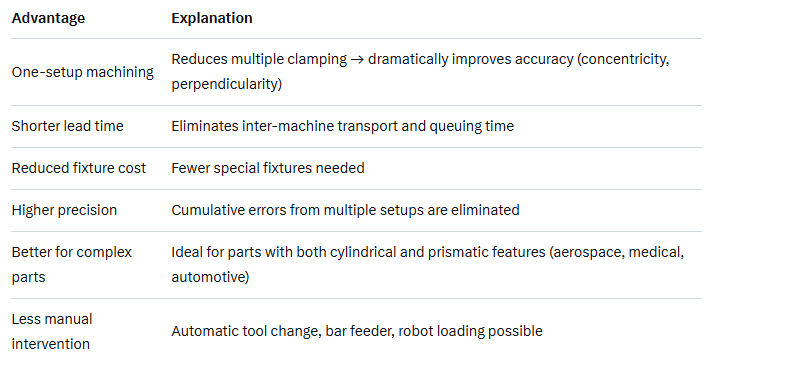
Typical Processes
1.That Can Be Done on One MachineExternal/internal turning
2.Milling (contouring, pockets, complex surfaces)
3.Drilling, tapping, boring
4.Deep-hole drilling (with gun drill tools)
5.Gear hobbing, spline cutting
6.Grinding (some high-end machines have grinding spindles)
7.Part transfer between main and sub-spindle (for 6-sided complete machining)
Representative Machine Layout (example: common dual-spindle + B-axis type)
1.Upper turret: 12–24 stations with live tools + Y-axis
2.Lower turret (optional)
3.Main spindle (C1) + sub-spindle (C2) for part handover
4.B-axis swivel milling spindle (±90°~±120°)
5.Automatic tool magazine (40–120+ tools)
Typical Application Industries
1.Aerospace: turbine disks, blisks, structural parts
2.Medical: hip joints, bone plates, surgical instruments
3.Automotive: crankshafts, camshafts, turbocharger impellers
4.Energy: valve bodies, pump housings
5.Precision molds and high-end general machinery
In short, turning-milling composite technology represents the highest level of modern metal cutting: “Done in One” — complete or near-complete machining of complex parts in a single machine and single setup, achieving maximum precision and efficiency. It is one of the core equipments in today’s smart factories and Industry 4.0 implementations.