Yes, Gorilla Glue (especially the original polyurethane-based Gorilla Glue) can work on 3D prints, but it's not always the best choice and results vary a lot depending on the filament type. Here's a breakdown:
When Gorilla Glue Works Well
Materials it bonds strongly to:
ABS, ASA, PETG, polycarbonate, nylon – these generally bond very well because Gorilla Glue loves slightly porous or chemically compatible surfaces.It expands as it cures, filling small gaps and creating a mechanical lock — useful for slightly misaligned parts or rough prints.
When It Performs Poorly or Fails
1.PLA: Bonds are often weak and brittle. PLA is smooth and non-porous, so the glue doesn't "bite" well. Many people report parts snapping apart easily.
2.Flexible filaments (TPU, TPE): Usually terrible — the foam expansion can push parts apart, and adhesion is poor.
3.Resin prints (SLA/DLP): Hit-or-miss. Cured resin is very smooth; sanding/scoring the surface helps a lot.
Tips for Better Results with Gorilla Glue on 3D Prints
1.Rough up the surfaces — Sand with 120-400 grit or score with a blade. More surface area = way stronger bond.
2.Lightly mist with water — Gorilla Glue needs moisture to activate and foam properly (one surface lightly damp, the other dry with glue).
3.Clamp tightly — The expansion can push parts apart if you don’t.
4.Use sparingly — A little goes a long way; too much foam squeezes out and makes a mess.
5.Wait 24 hours — Full cure takes longer than the “2-hour handling” claim for maximum strength.
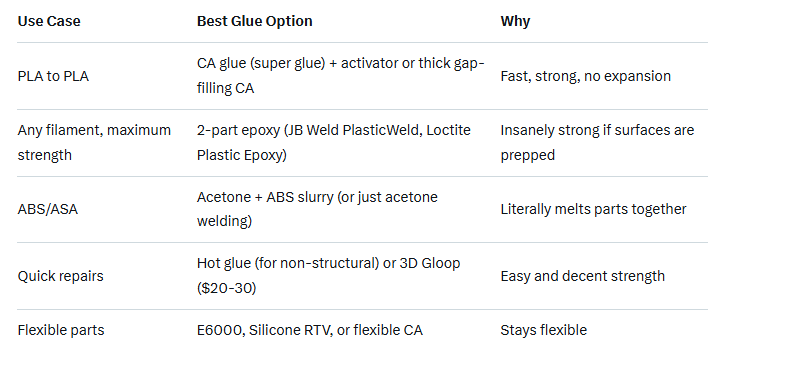
Better Alternatives (Often Recommended by the 3D Printing Community)