Die cast metal refers to parts produced through the die casting process, which forces molten metal under high pressure into a mold. The "strength" of die cast metal isn't a single value—it varies significantly based on the alloy used (most commonly aluminum, zinc, or magnesium), the specific composition, heat treatment (temper), and part design. Strength is typically measured by metrics like ultimate tensile strength (the maximum stress a material can withstand before breaking) and yield strength (the stress at which it begins to deform permanently).
Key Insights on Strength
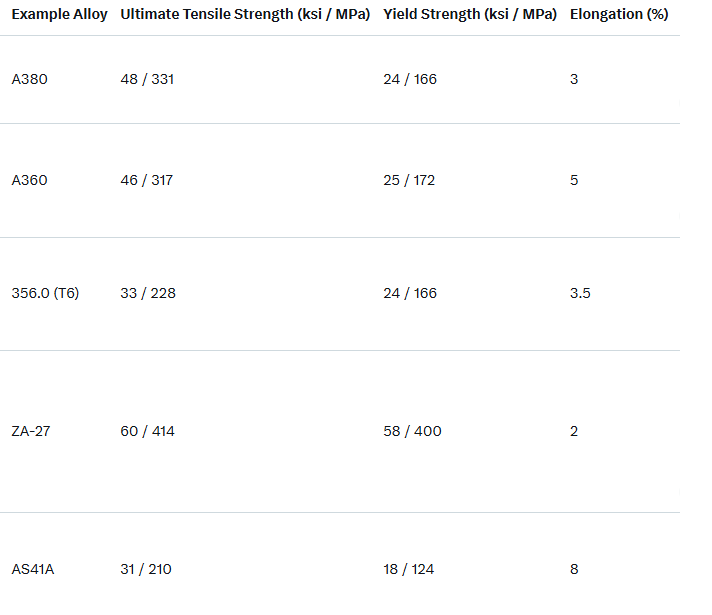
1.Aluminum alloys (e.g., A380, A360): Most common for die casting due to their balance of strength, lightweight nature, and corrosion resistance. Tensile strengths range from about 17–60 ksi (117–414 MPa), with yield strengths of 6–50 ksi (41–345 MPa).
2.Zinc alloys (e.g., ZA-27): Stronger and more brittle than aluminum, often used for high-strength, thin-walled parts. Tensile strengths up to 60 ksi (414 MPa).
3.Magnesium alloys (e.g., AZ91D): The lightest die cast option but generally the weakest, with tensile strengths around 31 ksi (210 MPa).
Comparisons: Die cast metals are stronger than many plastics (e.g., ABS at ~5–7 ksi) but weaker than wrought steels (50–200 ksi). They excel in complex shapes and production efficiency rather than extreme strength.For a quick overview, here's a table of typical mechanical properties for common die cast alloys (values are approximate minimums for as-cast or standard tempers; actuals can vary with processing):