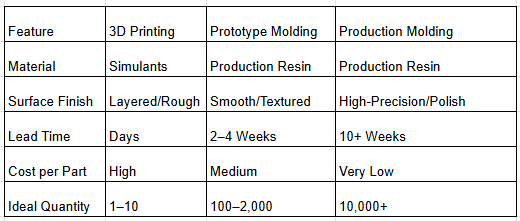
Prototype plastic injection molding is the middle ground between 3D printing and full-scale mass production. It’s essentially a "dress rehearsal" for your final product, using the same materials and processes you'll use in the real world, but at a fraction of the traditional cost and lead time.
Here is why it’s a critical step in the manufacturing process:
1. Material Authenticity
While 3D printing is great for shape, the materials often lack the mechanical properties of final production plastics. Prototype injection molding uses production-grade resins (like ABS, Polycarbonate, or Nylon). This allows you to test:
Structural Integrity: Will it snap under pressure?
Chemical Resistance: How does it react to oils or cleaning agents?
Heat Deflection: Does it melt in a hot car?
2. Speed to Market (Bridge Tooling)
Building a hardened steel production mold can take 10 to 12 weeks. A prototype mold—often made from aluminum or soft steel—can be ready in 2 to 4 weeks.
Bridge Tooling: It "bridges" the gap, allowing you to start selling or testing while your high-volume mold is still being machined.
3. Validating Design for Manufacturability (DFM)
A design might look perfect in CAD, but physics can be a harsh critic. Prototype molding helps you identify "molding defects" early, such as:
Sink Marks: Thick areas that shrink and create dimples.
Warping: Parts twisting as they cool.
Knit Lines: Where two flows of plastic meet and create a weak point.
4. Low-Volume Cost Efficiency
If you only need 100 to 2,000 parts, a full-scale production tool (which can cost $50,000+) is overkill. Prototype tooling offers a lower entry cost, making it the most economical way to get high-quality parts for:
Clinical trials
Beta testing with real users
Regulatory certifications (UL, FDA, etc.)
Comparison at a Glance