How is rapid prototyping done?
Rapid prototyping is the fast creation of physical (or sometimes digital) models/prototypes to test, validate, and improve designs before going into full production. Today (2026), it is mostly done using additive manufacturing (3D printing), but several other technologies are still widely used depending on material, accuracy, quantity, and mechanical requirements.
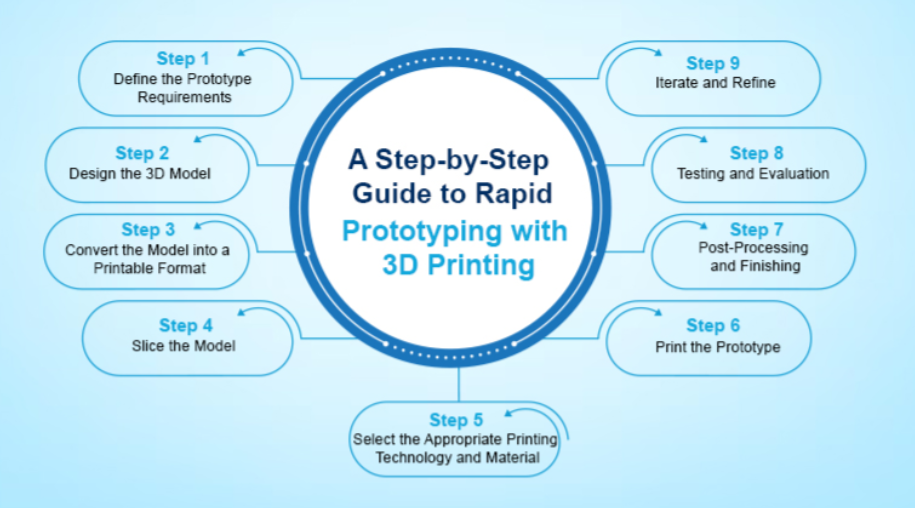
Most Common Modern Rapid Prototyping Workflow (2025–2026)
Here are the typical steps most companies follow today:
1.Concept & 3D CAD Design
Create or modify the digital 3D model using software (SolidWorks, Fusion 360, Creo, Onshape, etc.)
2.Design Validation & DFM Check (Design for Manufacturability)
Check wall thickness, undercuts, draft angles, tolerances, support requirements, etc.
3.File Preparation & Slicing
Export as STL/3MF/STEP → slice the model into thin layers (especially important for 3D printing)
4.Actual Fabrication (choose method according to needs)
5.Post-processing
Remove supports • Sanding • Vapor smoothing • Painting • Assembly • Functional testing
6.Evaluation → Iteration
Test → gather feedback → modify CAD → repeat the cycle (usually 3–8 iterations)
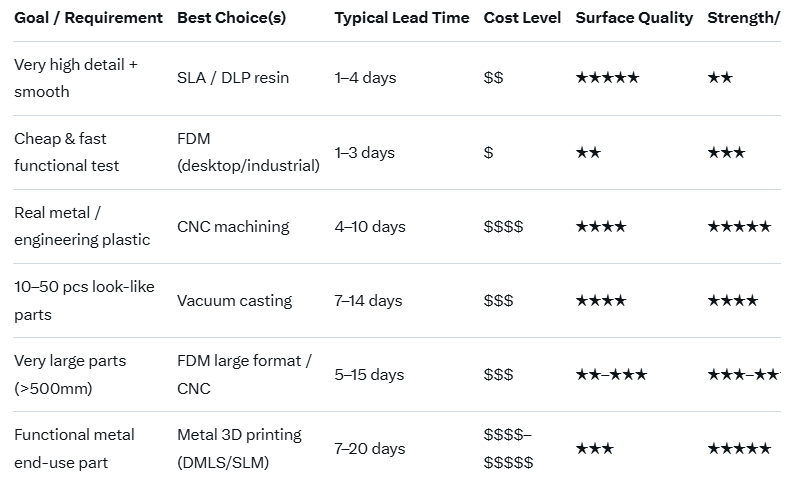
Popular Rapid Prototyping Technologies in 2026 (Comparison)
1. SLA / DLP (Resin 3D Printing) – Highest detail & smooth surface
Best for: visual models, small detailed parts, clear/translucent parts, jewelry, dental, master patternsHere are the typical step-by-step process visuals of SLA:
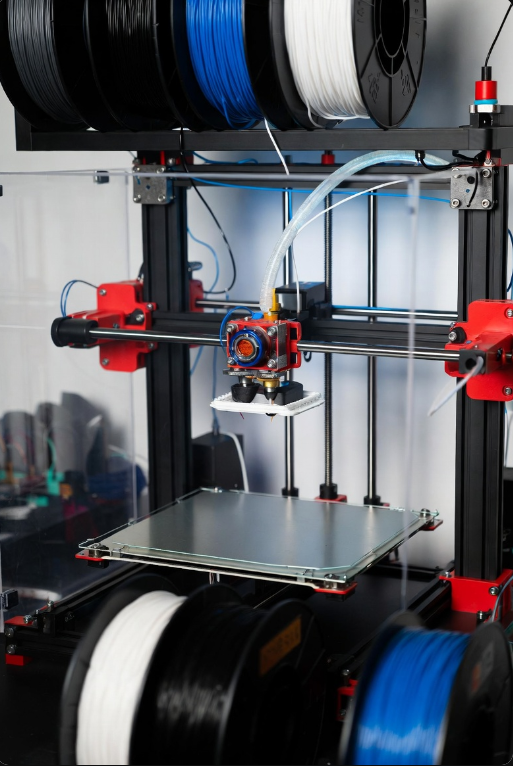
2. FDM / FFF (Fused Filament Fabrication) – Most affordable & common
Best for: quick & cheap functional tests, large parts, mechanical trialsLayer lines are clearly visible.
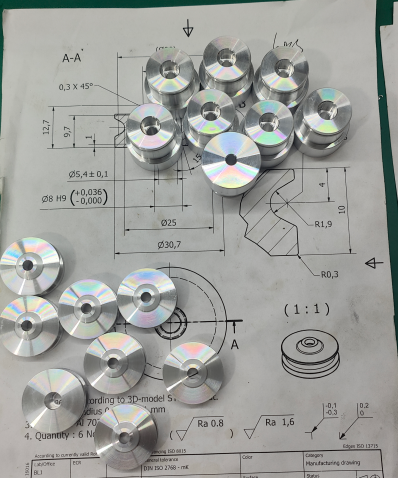
3. CNC Machining – Best material properties & accuracy
Best for: metal & engineering plastic prototypes that need real material properties, tight tolerances (±0.01 mm), functional testingHere are real aluminum CNC rapid prototypes:
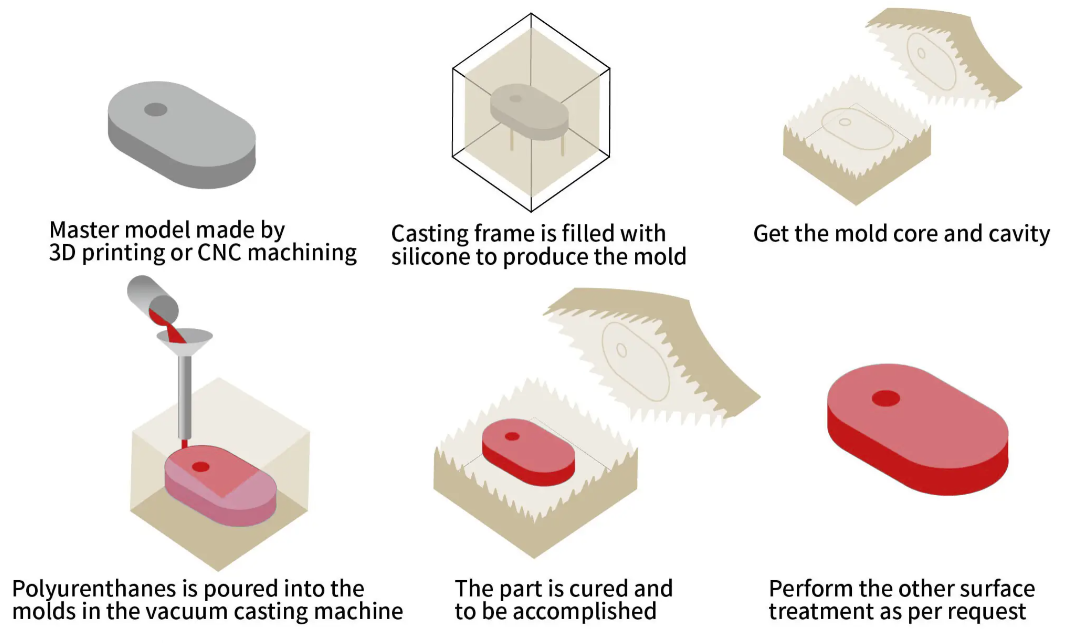
4. Vacuum Casting (Silicone Mold + PU Resin) – Best for small series (10–50 pcs)
Best for: plastic-like parts with good surface finish & different hardness/colors, low-volume production look-alikesTypical vacuum casting process steps:
Quick Decision Guide – Which Method to Choose?