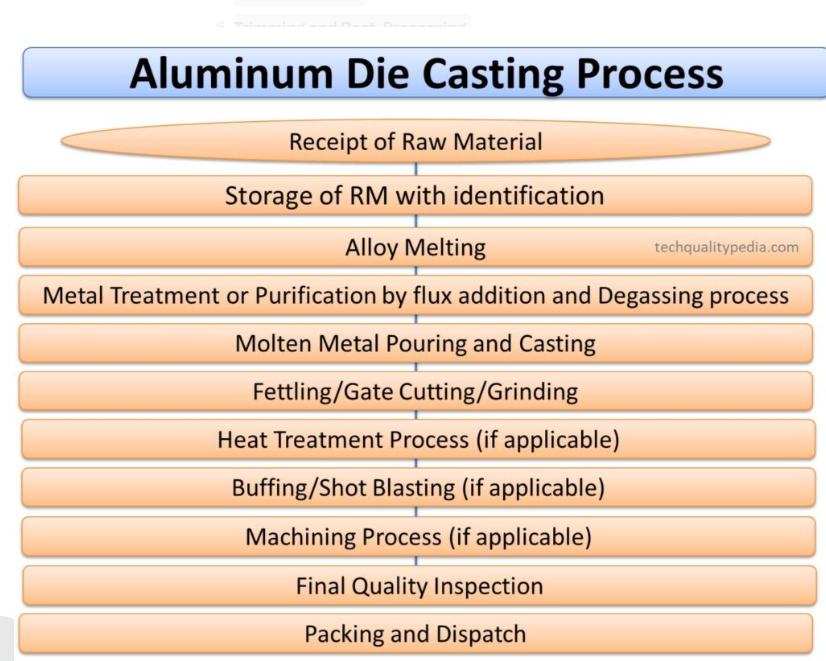
How to make an aluminum die-cast prototype?
Making an aluminum die-cast prototype involves creating a small batch of parts using high-pressure die casting to closely mimic production parts for testing fit, function, strength, and appearance. This approach uses rapid tooling (a simpler, faster-to-make prototype die) rather than full production multi-cavity tooling, which is expensive and time-consuming.
Key Methods for Aluminum Die-Cast Prototypes
Several approaches exist, with varying fidelity to the final production part:
1.True Die Casting with Prototype Tooling (Recommended for Closest Match)
This uses actual high-pressure die casting but with a single-cavity or simplified steel die (e.g., H-13 steel). It replicates material properties, surface finish, and mechanical strength best.
Pros: Same alloy, pressure, and properties as production. Ideal for functional testing.
Cons: Higher upfront cost and longer lead time (4-8 weeks for tooling).
Suitable for: 100-5,000+ pieces when accurate testing is critical.
2.Alternative Prototyping Methods (Faster/Cheaper but Less Accurate)
Plaster Mold Casting (Rubber Plaster Mold or RPM) — Gravity-poured into plaster molds; quick (2-4 weeks) and low-cost but lacks high-pressure densification.
CNC Machining from Solid Aluminum — Precise for low quantities but doesn't replicate cast microstructure or thin walls.
3D Printing (e.g., DMLS) — Great for complex geometries in small quantities but expensive and may need heat treatment.
Sand or Gravity Casting — Affordable for rough prototypes but poorer surface and properties.
For the most accurate "die-cast" prototype, focus on rapid die casting tooling.
Step-by-Step Process for True Aluminum Die-Cast Prototyping
1.Design the Part
Create a 3D CAD model. Optimize for die casting: add draft angles (1-3°), uniform wall thickness (2-4mm ideal), fillets, and avoid undercuts. Use simulation software to predict fill, porosity, and cooling.
2.Design and Manufacture the Prototype Tool (Rapid Tooling)
Design a simplified single-cavity die (often in softer steel for faster machining). Use high-speed CNC (e.g., 5-axis) to mill the die. This takes 2-6 weeks vs. months for production tools. Cost: 10-50% of full production die.
3.Prepare the Die Casting Machine
Mount the prototype die in a cold-chamber die casting machine (common for aluminum to avoid corrosion).
4.Melting and Injection
Melt aluminum alloy (e.g., A380, A360) to 660-700°C. Ladle molten metal into the shot chamber. Inject under high pressure (10-175 MPa) to fill the cavity rapidly, ensuring dense structure.
5.Cooling and Ejection
Allow controlled cooling (50-150°C/sec) for solidification. Open the die and eject the part using pins (at ~200-300°C).
6.Trimming and Post-Processing
Remove flash, gates, and overflows. Apply finishing: machining, trimming, heat treatment (for strength), surface treatments (anodizing, powder coating).
7.Inspection and Testing
Check dimensions, porosity, and mechanical properties. Iterate design if needed.