
Key Differences Between Die Casting and Injection Molding
Die casting and injection molding are both high-pressure manufacturing processes that involve injecting molten material into a reusable mold (or "die") to produce precise, complex parts. However, they differ significantly in materials, applications, and characteristics.
1. Materials Used
a.Die Casting: Primarily uses non-ferrous metals such as aluminum, zinc, magnesium, or copper alloys. The material is fully melted into a liquid state before injection.
b.Injection Molding: Primarily uses thermoplastics, thermosets, or polymers (plastics). The plastic is heated to a molten state but not as hot as metals. (Note: There is a separate process called metal injection molding (MIM) for fine metal powders, but it's distinct from standard die casting.)
2. Process Overview
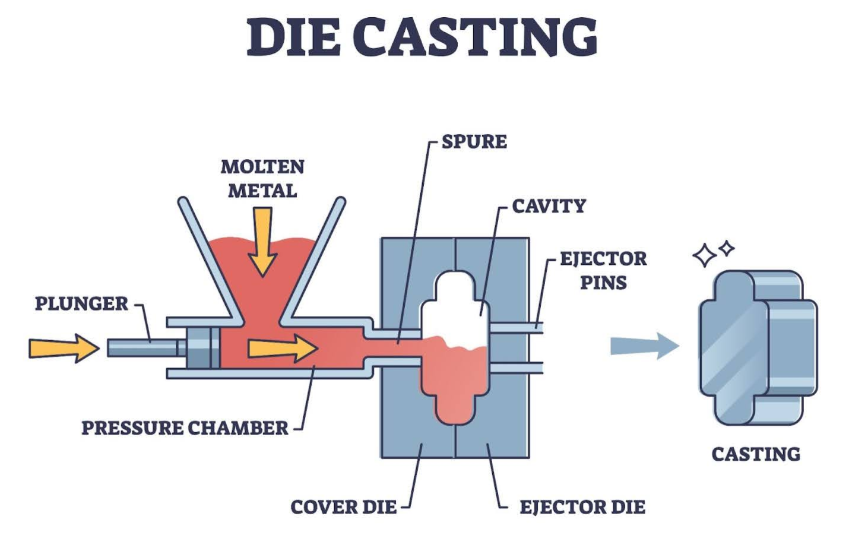
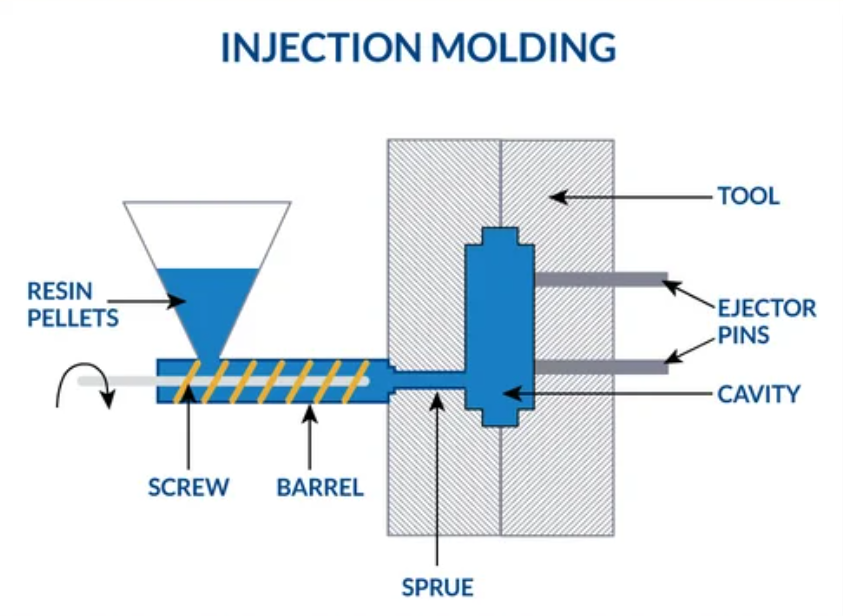
Both processes follow similar steps: melt material → inject under high pressure → cool and solidify → eject part.Here are diagrams illustrating the processes:
a.Die Casting Process (metal-focused, often using hot or cold chamber machines):
b.Injection Molding Process (plastic-focused, using a screw to melt and inject):
3. Part Properties
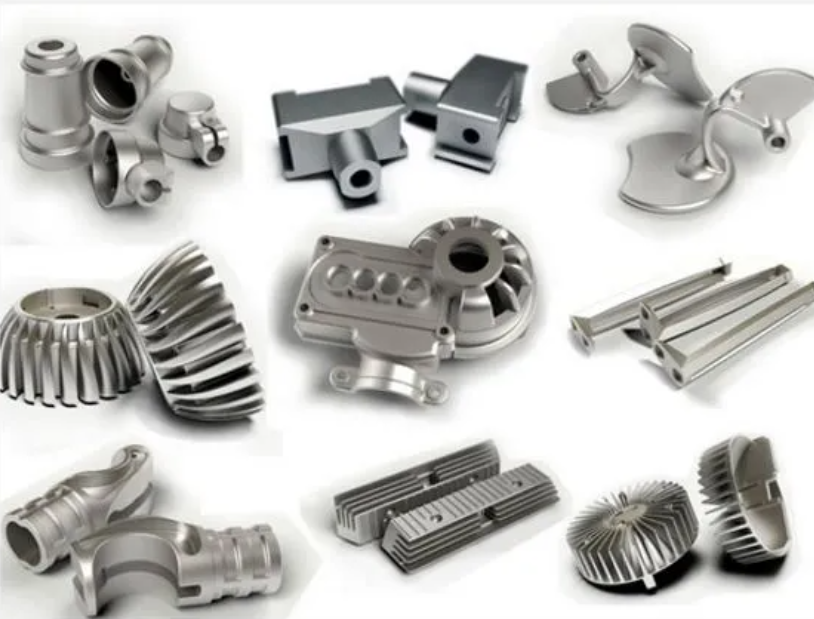
a.Die Casting: Produces parts with higher strength, durability, heat resistance, and conductivity. Excellent for structural or load-bearing components. Parts often have thinner walls and better dimensional stability.
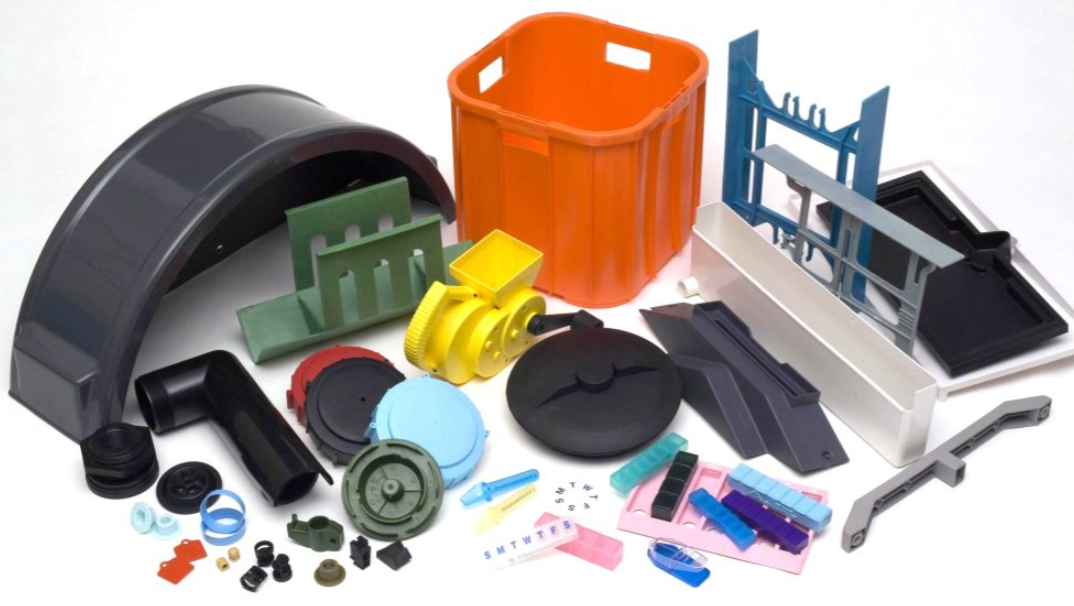
b.Injection Molding: Produces lighter, more flexible parts with good insulation and corrosion resistance. Wide color/options and easier to incorporate features like threads or inserts.
4. Cost and Production Considerations
a.Tooling Costs: Both require expensive steel molds, but die casting molds are often costlier due to higher temperatures and pressures.
b.Per-Part Cost: Injection molding is generally cheaper for high volumes due to lower material costs. Die casting can be more economical for metal parts needing superior properties.
c.Production Volume: Both excel at high-volume production (thousands to millions of parts).
d.Cycle Time: Similar, but die casting may have faster cooling for some metals.
5. Applications
a.Die Casting: Automotive (engine blocks, transmissions), electronics (heat sinks), appliances, hardware.
b.Injection Molding: Consumer goods (bottles, toys), medical devices, packaging, automotive interiors.
In summary,
choose die casting for strong, heat-resistant metal parts and injection molding for lightweight, cost-effective plastic parts. The best process depends on your project's material requirements, strength needs, and budget.