
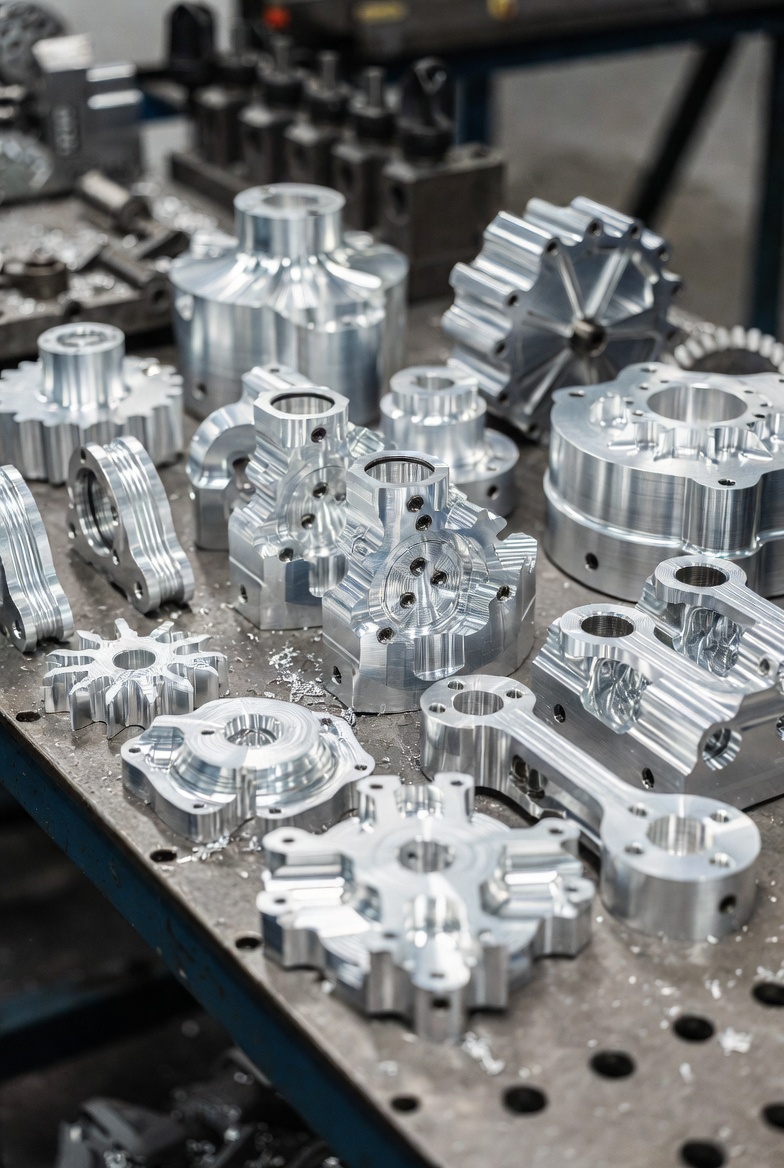
An aluminum CNC prototype is a functional model or early-version part machined from aluminum using Computer Numerical Control (CNC) technology. Manufacturers create these prototypes during product development to test design, functionality, fit, and performance before full-scale production.CNC machining is a subtractive process: it starts with a solid block of aluminum and precisely removes material using computer-controlled tools (like mills, lathes, or routers) to shape the desired part. This method achieves high precision, often with tolerances as tight as ±0.01mm or better.
Why Aluminum for CNC Prototypes?
1.Aluminum is one of the most popular materials for CNC prototyping due to its excellent properties:Lightweight yet strong — Superior strength-to-weight ratio (about one-third the density of steel).
2.Excellent machinability — Machines faster and easier than steel or titanium, reducing production time and tool wear.
3.Corrosion resistance — Forms a natural oxide layer; can be enhanced with anodizing.
4.Good thermal and electrical conductivity — Ideal for heat sinks or electronic enclosures.
5.Cost-effective and recyclable — Abundant, affordable, and eco-friendly.
Common alloys include 6061-T6 (versatile, corrosion-resistant, used in electronics and automotive) and 7075 (higher strength for aerospace).
Benefits
a.Rapid iteration → Quick design changes and testing.
b.High accuracy for complex geometries → Supports 3- to 5-axis machining.
c.Functional testing → Prototypes closely mimic final production parts.
Scalable → Easily transitions to low- or high-volume manufacturing.
Applications
These prototypes appear in aerospace (brackets, housings), automotive (engine parts, trim), electronics (enclosures), medical devices, and consumer products.
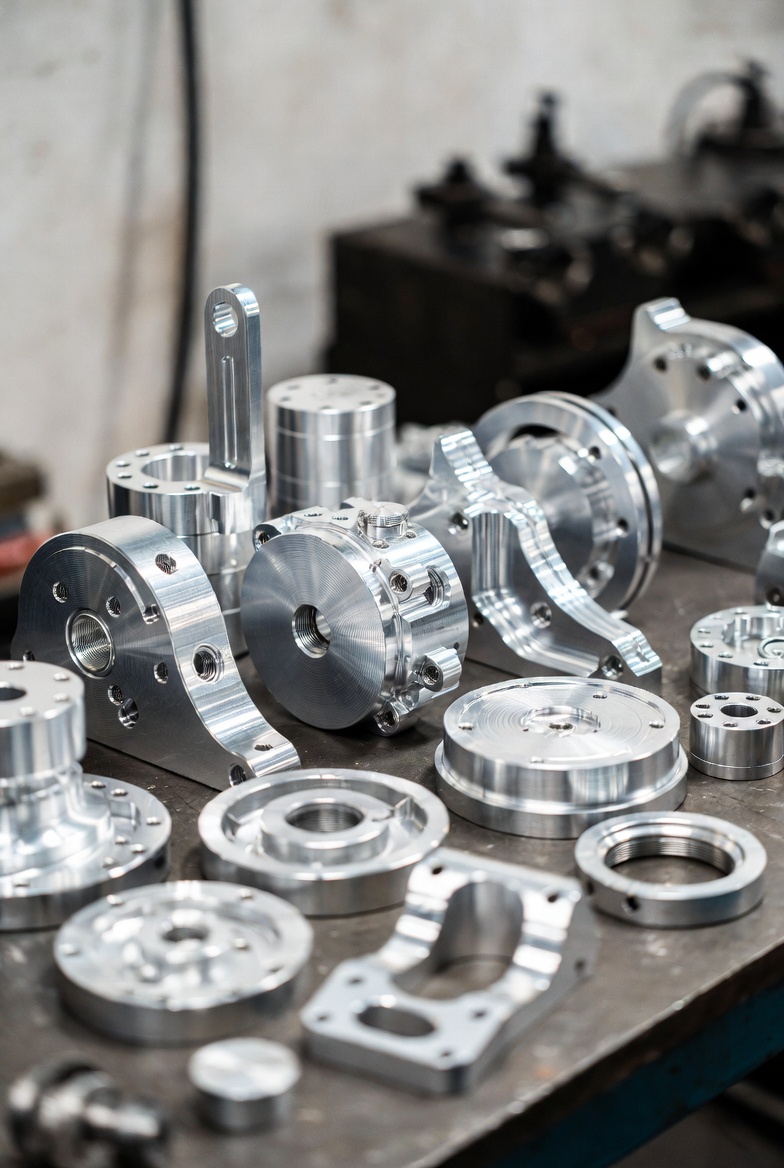
Alternatives like 3D printing (e.g., DMLS for aluminum) or investment casting exist, but CNC remains preferred for its precision, surface finish, and material properties in functional prototypes.