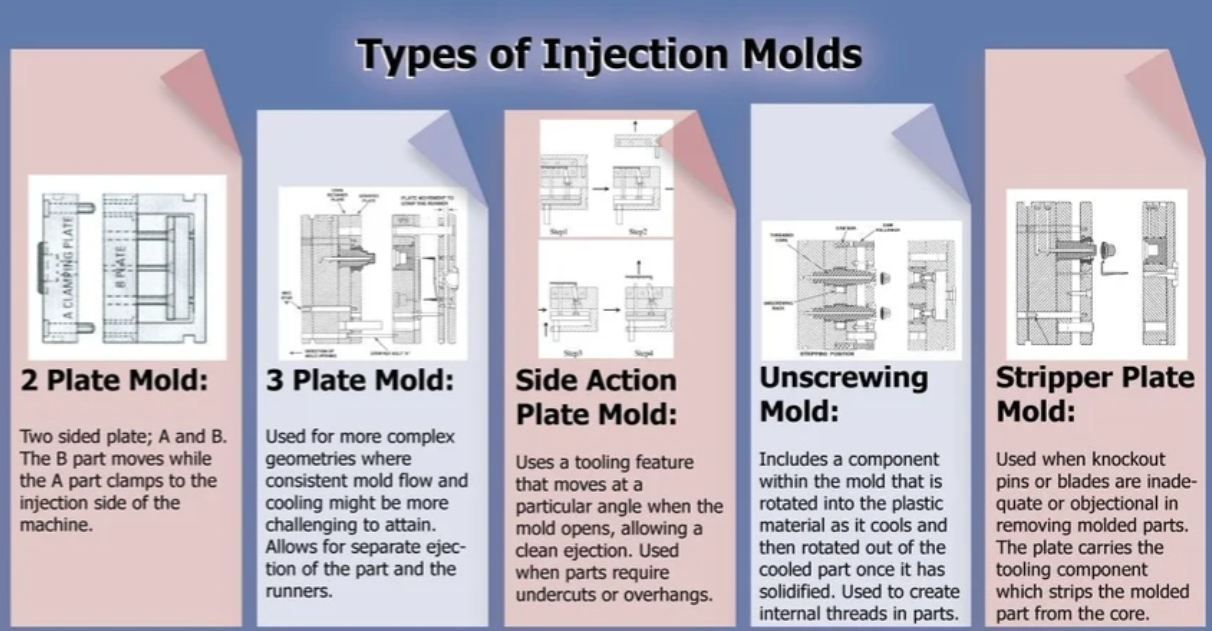
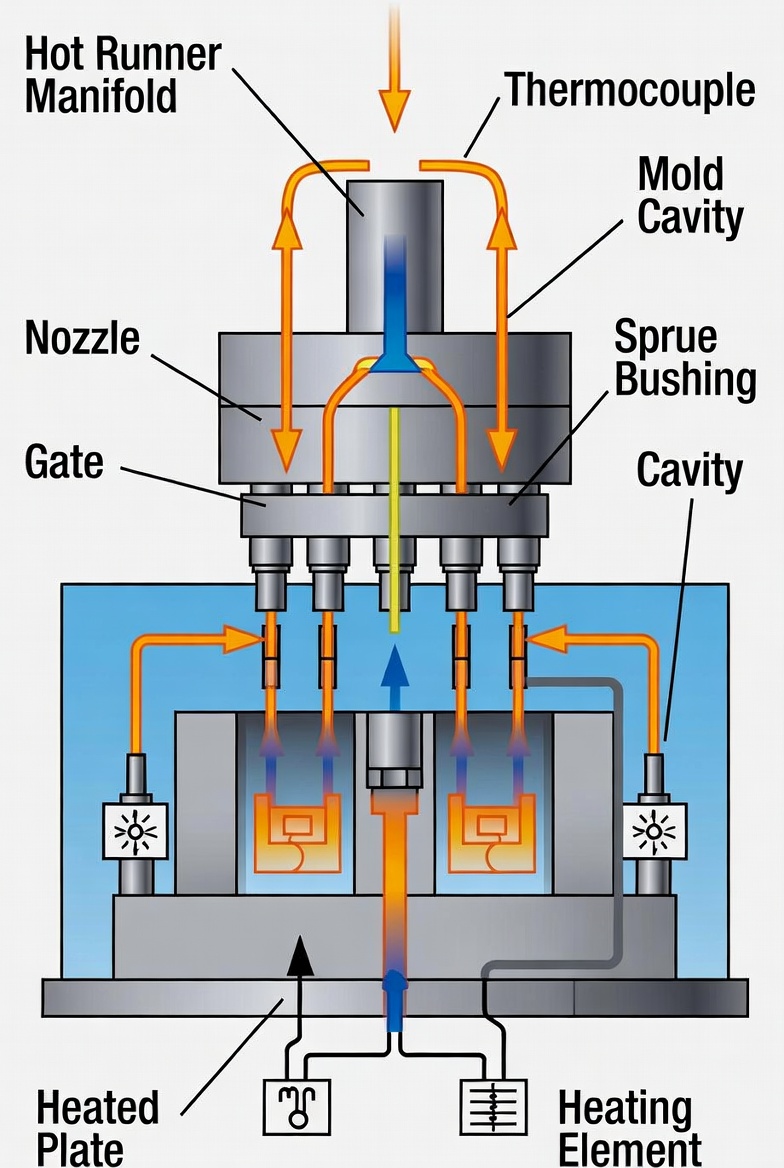
Injection molds (also known as injection moulds) are tools used in the plastic injection molding process to shape molten material into parts. They are classified in several ways, primarily by runner system (how material is fed into the cavity), number of plates/parting lines, and special features (for complex parts or production needs). Here are the most common types:
1.Based on Runner System
Cold Runner Molds: The plastic in the runners (channels) cools and solidifies with the part, creating waste that must be removed or recycled. Common in simpler, lower-volume production.
Hot Runner Molds: Runners are heated to keep material molten, reducing waste and cycle time. Ideal for high-volume production but more expensive.
2. Based on Number of Plates/Parting Lines
Two-Plate Molds (Single Parting Line): The simplest and most common type. Consists of two main plates (core and cavity sides) that separate to eject the part. Suitable for most applications, single or multi-cavity.
Three-Plate Molds (Double Parting Line): Includes an extra middle plate for automatic runner separation (e.g., point gating). Better for precise gate placement and multi-cavity setups with cold runners.
3. Based on Special Features
Side Action/Slider Molds: Use sliding cores or lifters for parts with undercuts or side holes/features.
Unscrewing Molds: For threaded parts (e.g., caps), with mechanisms to rotate and release threads.
Family Molds: Produce multiple different parts in one cycle (cost-effective for low-volume assemblies).
Multi-Cavity Molds: Multiple identical cavities for high-volume production.
Single-Cavity Molds: One part per cycle, often for prototypes or large parts.