
In general injection molding, the standard minimum wall thickness is between 1.0 mm and 2.0 mm. However, with specialized "thin-wall" techniques and specific materials, you can go as thin as 0.3 mm to 0.5 mm.
How thin you can go depends on the material's ability to flow and the distance it has to travel within the mold.
1. Minimum Thickness by Material
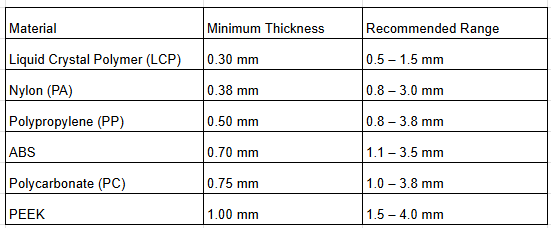
Materials with low viscosity (high flow) can fill thinner cavities. Below are the typical minimums for common resins:
2. The L/T Ratio Rule
The most important technical constraint isn't just a single number; it is the Flow Length to Thickness (L/T) ratio. This measures how far the plastic can travel from the "gate" (the entry point) before it freezes.
A.Standard Molding: Usually supports an L/T ratio of 100:1.
B.Thin-Wall Molding: Can achieve ratios of 200:1 or higher.
Example: If your wall is 0.5 mm thick, a standard machine might only be able to push the plastic 50 mm before it cools and stops.
3. Challenges of Going Ultra-Thin
Designing parts at the absolute limit of thinness introduces several manufacturing risks:
A.Short Shots: The plastic freezes before it completely fills the mold.
B.High Pressure Requirements: Pushing plastic into a 0.5 mm gap requires massive injection pressure, which can wear out molds quickly.
C.Warping: Thin parts have less structural integrity and are more likely to twist as they cool.
D.Knit Lines: Where two flows of plastic meet, a thin wall may not have enough heat to "weld" them together properly, creating a weak point.
4. How to Design for Thinness
If you need a part to be thin but strong, professionals use these strategies:
A.Ribs and Gussets: Instead of making the whole wall thick, add "ribs" (structural veins). These should be 40–60% of the thickness of the main wall to prevent "sink marks."
B.Radius Corners: Avoid sharp 90-degree angles. Adding a radius (curved corner) helps the plastic flow smoothly and reduces stress.
C.High-Speed Presses: Use "all-electric" or high-speed hydraulic machines that can inject the plastic at velocities up to 500+ mm/s to fill the mold before it freezes