The short answer is yes, you can injection mold rubber. However, the process is significantly different from the injection molding used for plastics (like LEGOs or water bottles) because of how the material reacts to heat.
While plastic is thermoplastic (it melts when heated and solidifies when cooled), most rubber is thermoset. This means it undergoes a chemical change called vulcanization or "curing" when heated
Key Types of Rubber Suitable for Injection Molding
1.Liquid Silicone Rubber (LSR): This is the most common for injection molding. It's a two-component liquid that's pumped, mixed, and injected into a heated mold for rapid curing. Ideal for high-precision, high-volume parts like medical devices, seals, and baby products.
2.Solid rubbers (e.g., natural rubber, EPDM, nitrile, neoprene): These are fed as strips or pellets into a screw barrel, heated to increase flow, and injected under high pressure. The mold is heated to vulcanize the rubber.
3.Thermoplastic elastomers (TPEs/TPRs): These rubber-like materials behave like plastics—they melt and solidify on cooling, making them easier and cheaper to mold on standard plastic machines. They're recyclable but may not match true rubber's heat resistance or elasticity in extreme conditions.
How Rubber Injection Molding Works
In plastic molding, you use a cold mold to cool down hot plastic. In rubber injection molding, the process is flipped: you use a heated mold to "cook" the rubber into its final shape.
1.Preparation: Uncured rubber (usually in strips or pellets) is fed into the machine.
2.Heating & Plasticizing: A rotating screw warms the rubber slightly to make it pliable, but not so hot that it starts curing prematurely.
3.Injection: The rubber is injected at high pressure into a pre-heated mold cavity.
4.Vulcanization: The heat from the mold (usually between 150°C and 200°C) triggers a chemical reaction that creates cross-links between polymer chains.
5.Ejection: Once cured, the part is ejected. Unlike plastic, these parts can be removed while still hot without losing their shape.
Common Materials Used
There are three main categories of "rubbers" used in this process:

Pros and Cons
The Advantages
1.High Precision: Excellent for complex geometries and tight tolerances (like O-rings or seals).
2.Speed: Much faster than compression molding for high-volume production.
3.Consistency: The automated nature reduces human error and material waste.
The Challenges
1.Flash: Because rubber is injected at high pressure and has low viscosity when hot, it can leak out of the mold seams, creating "flash" that must be trimmed.
2.Tooling Cost: The molds must withstand high heat and pressure, making them more expensive than some other manufacturing methods.
3.Scrap: Once a thermoset rubber part is cured, it cannot be melted down and reused.
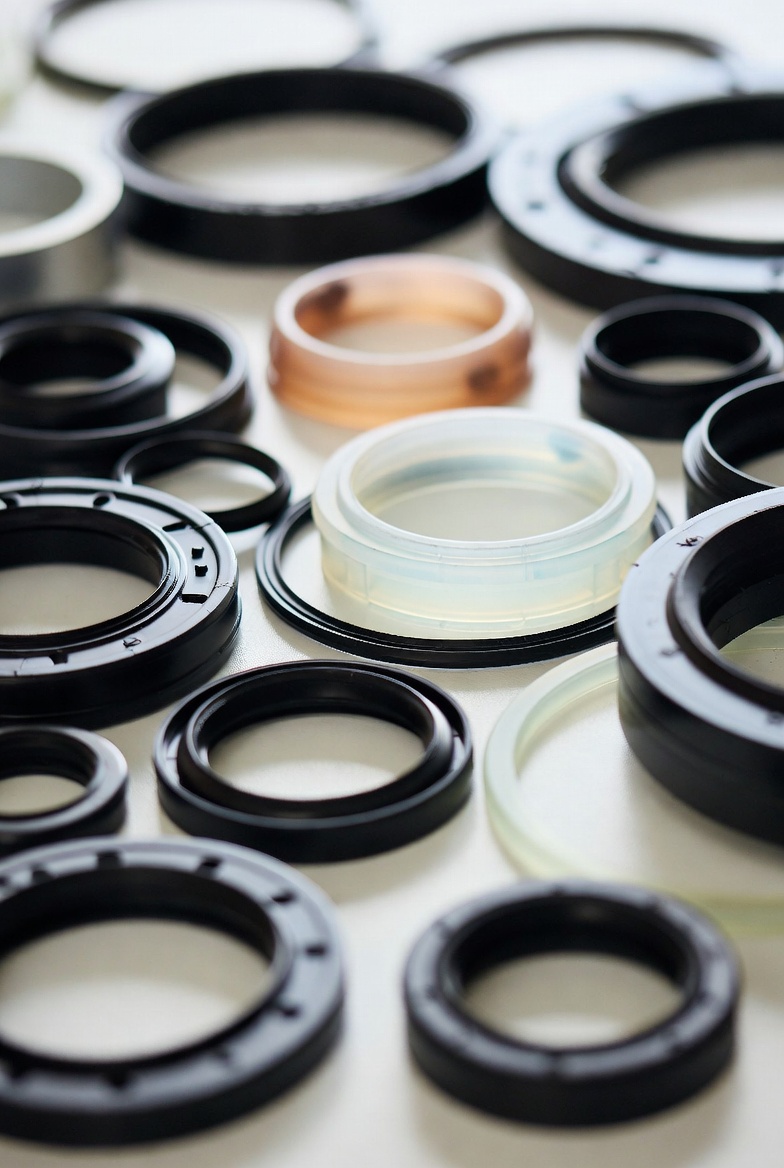
And here are examples of injection-molded rubber parts (e.g., seals, gaskets, O-rings, and custom components):