
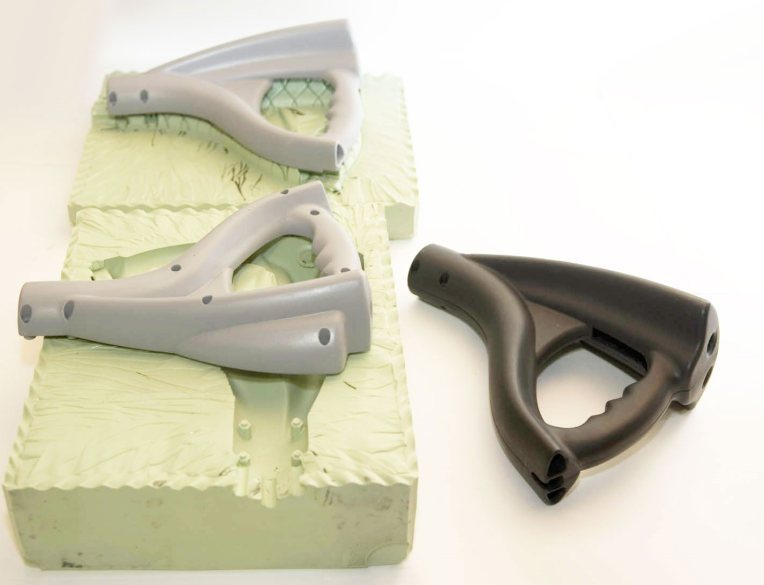
A silicone mold prototype refers to a prototyping technique in product development where a flexible mold made from silicone rubber creates small quantities of prototype parts. This method is popular for rapid prototyping because it's cost-effective, quick, and suitable for low-volume runs (typically 10–100 parts) before committing to expensive hard tooling like steel injection molds.
Primary Context: Urethane Casting with Silicone Molds
The most common use involves creating a silicone rubber mold (often RTV — room temperature vulcanizing) from a master pattern (e.g., 3D-printed or machined part). Designers then cast polyurethane (urethane) resins into the mold to produce prototypes that mimic the look, feel, and properties of final plastic parts.
Key steps in this process:
1.Create a master pattern (using 3D printing, CNC machining, or an existing object).
2.Build a mold box around the master and pour liquid silicone rubber over it.
3.Allow the silicone to cure, then cut or separate the mold to remove the master.
4.Pour casting resin (e.g., urethane) into the silicone mold, often under vacuum to avoid bubbles.
5.Demold the cured prototype part.
This approach is inexpensive for short runs and allows complex geometries with undercuts, thanks to silicone's flexibility.
Alternative Context: Prototyping Silicone Parts Themselves
In some cases, "silicone mold prototype" refers to using molding processes to prototype parts made of silicone rubber (e.g., seals, gaskets, medical devices, or wearables). Methods include:
1.Compression molding → Places silicone material in an open mold and compresses it under heat.
2.Liquid silicone rubber (LSR) injection molding → Uses soft aluminum tools for higher-fidelity prototypes.
3.RTV casting → Pours silicone into a mold for very low volumes.
These produce functional silicone prototypes quickly, often in days to weeks.

Why Use Silicone Molds for Prototyping?
1.Low cost compared to metal tooling.
2.Fast turnaround (molds in days, parts in hours).
3.High detail reproduction and flexibility for demolding complex shapes.
4.Ideal for testing design, fit, function, and market response.