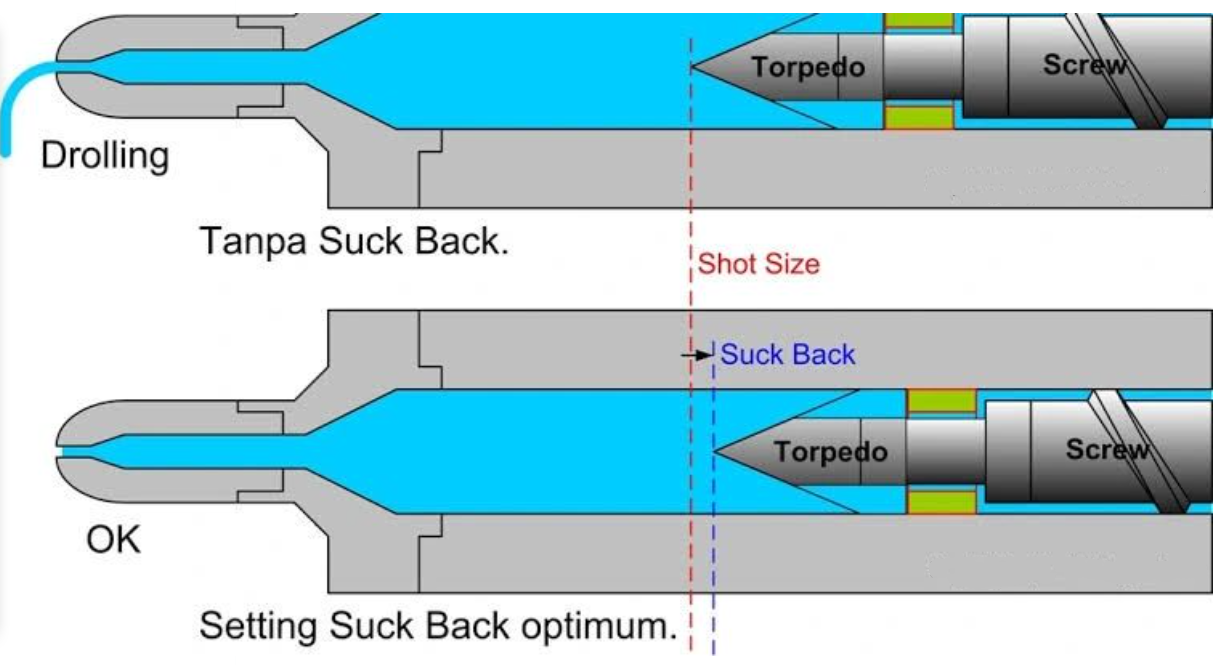
What is decompression injection molding?
Decompression in injection molding (also known as suck-back or screw decompression) is a controlled process step where the injection screw retracts slightly after metering (plasticizing) the material or at the end of the injection/packing phase. This relieves built-up pressure in the molten plastic ahead of the screw tip and nozzle.
Why Decompression Is Used
After the screw rotates to melt and meter plastic (building back pressure for consistency), residual pressure can cause the material to drool or leak from the nozzle when the mold opens or the injection unit retracts. Decompression pulls the screw back linearly (typically a few millimeters) without rotation, reducing this pressure and preventing issues like:
Material drooling or stringing at the nozzle.
Salivation in open-nozzle systems.
Inconsistent shots or defects in hot-runner molds.
It also helps reduce wear on the check valve (non-return valve) at the screw tip and can stabilize the process by ensuring consistent cushion (remaining melt volume) and shot size.
When and How It Occurs
Modern injection molding machines often allow decompression:
Before screw recovery — To ease start of rotation and reduce torque.
After screw recovery — (Most common) to relieve pressure post-metering.
The distance is small (e.g., 2-10 mm, often set to 1-1.5 times the check ring travel) to avoid sucking in air, which could cause splay, bubbles, or voids in parts.
Benefits and Risks
Benefits: Prevents drool/stringing, reduces material waste, improves part consistency, extends mold life by controlling pressure transitions, and can eliminate need for nozzle shut-off valves.
Risks: Too much decompression introduces air (leading to defects); too little fails to prevent drooling or causes inconsistent pressure.
Decompression is a key parameter in scientific molding for process optimization, distinct from related techniques like injection-compression molding (where melt is injected into a partially open mold and then compressed).
Here are diagrams illustrating the decompression/suck-back process and related screw positions in injection molding: