
How does a vacuum casting machine work?
A vacuum casting machine primarily refers to equipment used in vacuum casting (also known as urethane casting or silicone molding), a process for producing high-quality plastic prototypes and small-batch parts. It replicates a master model using polyurethane resins in a silicone mold under vacuum to eliminate air bubbles and ensure precise, detailed fills.
Key Steps in the Vacuum Casting Process
Create a master pattern — Produce a high-precision model (often via 3D printing or CNC machining) with the desired surface finish, as it defines all details in copies.
Build the silicone mold — Suspend the master in a casting box, pour liquid silicone rubber around it, and cure it (often in an oven). Cut the cured mold along a parting line to remove the master, creating a cavity.
Prepare the resin — Mix two-part polyurethane resin (with optional pigments or fillers for specific properties like flexibility or rigidity) and degas it under vacuum to remove air.
Cast under vacuum — Place the open or assembled silicone mold in the machine's vacuum chamber. Pour or inject the resin into the mold while applying vacuum, which evacuates air from the cavity and draws the resin into fine details, preventing bubbles and voids.
Cure the part — Transfer the filled mold to an oven (often integrated in the machine) for controlled heating (typically around 70°C) to solidify the resin.
Demold and finish — Remove the cured part from the silicone mold, trim gates/runners, and apply post-processing (e.g., painting or sanding). One mold typically yields 20–50 parts before degrading.
How the Machine Works
The machine features a vacuum chamber that creates negative pressure to remove air from the mold and resin, ensuring complete filling and bubble-free results. Advanced models include automated mixing bowls, pouring systems, degassing controls, and heating elements. Vacuum pulls resin into complex geometries and undercuts that gravity pouring alone couldn't achieve reliably.
Machine Diagrams and Schematics
These illustrations show the internal workings and principles:
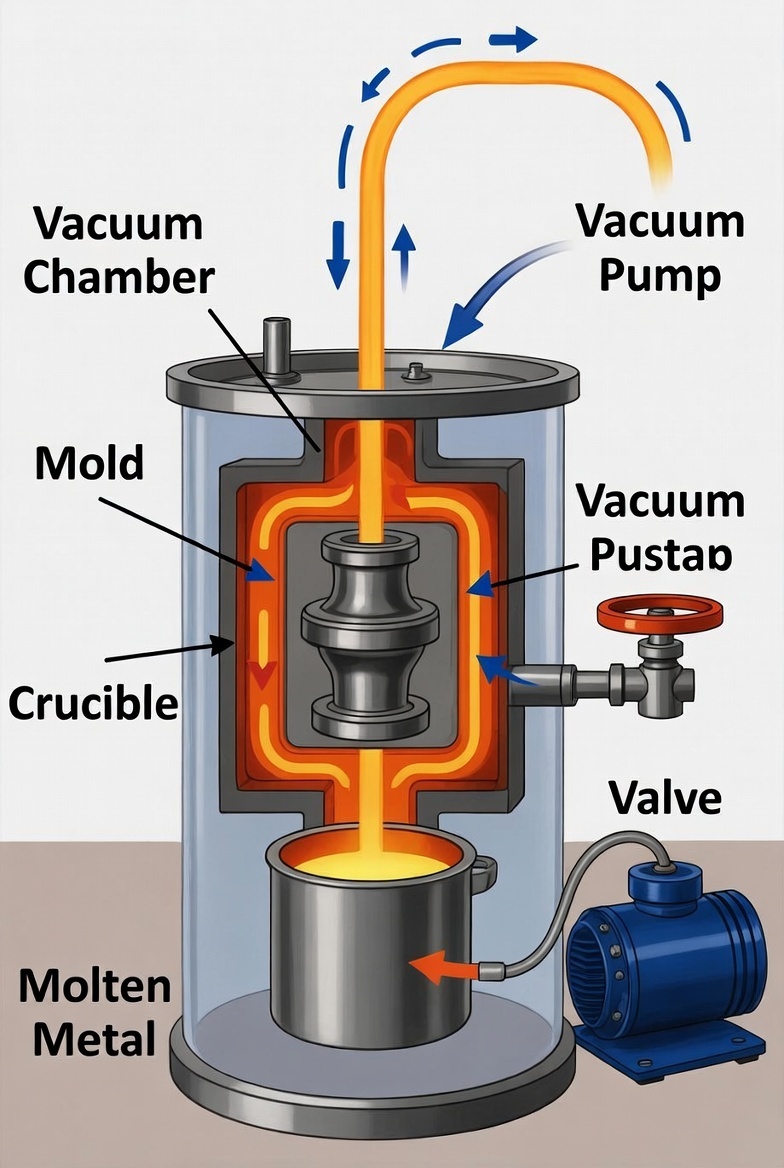
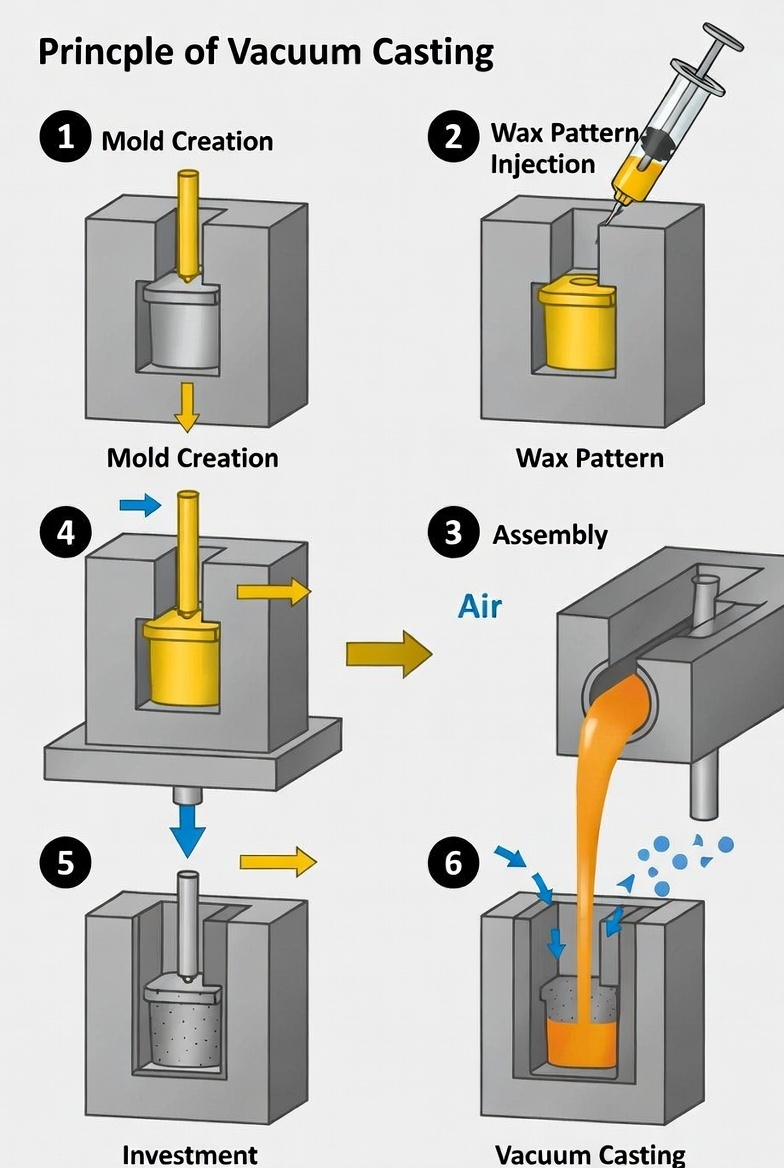
This process is ideal for low-volume production (5–100 parts), offering injection-molding-like quality at lower cost without hard tooling. It's widely used in prototyping for consumer products, medical devices, and automotive parts.