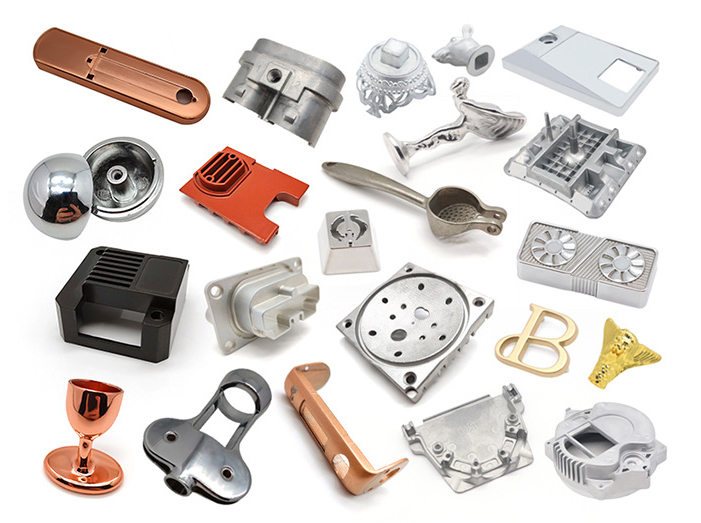
Zinc alloys are widely used in die casting due to their unique combination of mechanical, physical, and processing properties that make them ideal for high-precision, high-volume production of complex parts.
Key Reasons
1.Low Melting Point — Around 419°C (much lower than aluminum's ~660°C or magnesium's), allowing the use of the efficient hot-chamber die casting process. This results in faster cycle times, higher productivity, and lower energy consumption.
2.Excellent Fluidity and Castability — Molten zinc flows easily into intricate mold details, enabling the production of complex geometries, thin walls (as thin as 0.5-1 mm), tight tolerances, and smooth surfaces with minimal post-processing.
3.Superior Mechanical Properties — High tensile strength, impact resistance, ductility, and hardness compared to other die casting materials like aluminum or magnesium. This allows for stronger parts with thinner sections, reducing material use and weight while maintaining structural integrity.
4.Long Tool Life — Lower melting temperature and reduced abrasiveness mean dies last significantly longer (up to 10 times longer than for aluminum), lowering tooling costs over high-volume runs.
5.Excellent Finishing Characteristics — Smooth as-cast surfaces accept a wide range of finishes (plating, painting, powder coating) easily, providing aesthetic appeal, corrosion resistance, and wear properties.
6.Cost-Effectiveness and Efficiency — Faster production rates, less machining needed, and high recyclability make zinc economical for mass production.
7.Other Benefits — Good thermal/electrical conductivity, vibration dampening, and EMI/RFI shielding.
Common zinc alloys include the Zamak series (e.g., Zamak 3 for general use) and ZA alloys (e.g., ZA-8, ZA-27 for higher strength).
These properties make zinc die casting popular in industries like automotive (e.g., door handles, locks, brackets), electronics, hardware, and consumer goods.