
Soldering die-cast zinc (often called “Zamak” or pot metal) is tricky because:
1.It has a low melting point (~380–420°C / 716–788°F depending on exact alloy)
2.It usually contains aluminum (3–4%) which instantly forms a tough oxide layer
3.C.It often has impurities and trapped casting gases
4.Standard tin-lead or tin-based electronics solders won’t wet it properly
If you really need to join two die-cast zinc parts (e.g. restoring old car carburetors, toys, belt buckles, classic car trim, etc.),
here are the practical methods that actually work:
1. Best Option: Low-Temperature “Zinc-Aluminum” Solders (Recommended)
Special solders made for zinc die-castings exist and give the strongest, most reliable joints.
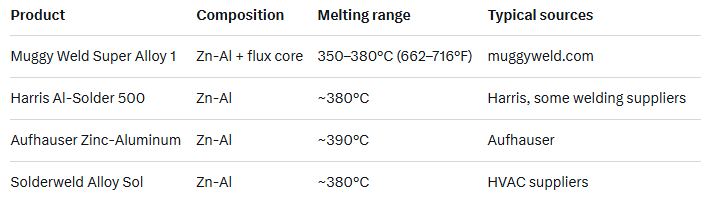
Technique:
1.Clean mechanically (grind, sand, wire brush) until shiny.
2.Preheat the part to ~200–250°C with a propane torch or heat gun (prevents thermal shock and helps flux).
3.Use a stainless-steel brush aggressively while melting the rod – this removes the oxide in-situ oxide.
4.The flux in these rods is very aggressive; keep rubbing until the solder flows like water.
5.Let it cool slowly (wrap in ceramic blanket or vermiculite) to avoid cracks.
2. Second-Best:High-Power Ultrasonic Soldering
Ultrasonic soldering irons (e.g. Sunbonder USM-5600, MBR SOLDERTIP) cavitate the surface and destroy the oxide without flux.
3. Acceptable for Non-Structural Repairs: Tin-Bismuth Low-Temp Solders
ChipQuik alloy (58Bi/42Sn) melts at only 138°C and can sometimes wet zinc if you prep aggressively.Steps:
1.Grind/scratch the surface until bright.
2.Use very aggressive liquid flux (Superior No. 71, Indium TACFlux 020B, or even muriatic acid cut 50/50 with water).
3.Tin the surface with a big soldering iron or torch while scrubbing with stainless brush.
4.Works for very light-duty cosmetic repairs only – the joint is weak.
4. What Almost Never Works
1.Regular 60/40 or 63/37 electronics solder with normal rosin flux → will just ball up.
2.Silver solder (silver “braze”) → temperature too high, melts the zinc part.
3.TIG welding zinc die-cast → usually burns out the zinc, leaves porous mess.
5. Alternative That Is Often Better Than Soldering
For structural repairs on die-cast pot metal, many professionals now use low-temperature brazing with aluminum brazing rods (Durafix, HTS-735 II, etc.) or two-part epoxy metal fillers (JB Weld, Devcon Plastic Steel, Belzona 1111). These are often stronger and far easier than trying to solder.
Summary – Quick Decision Tree
1.Need real strength and authentic solder-like appearance → Super Alloy 1 or similar Zn-Al rod + torch
2.Cosmetic only, very thin parts → ChipQuik BiSn + aggressive flux
3.Don’t care about looks or just filling pits → Epoxy or low-temp aluminum brazing rod